
Winter Chin Hair: Why It’s Stubborn & How Threading Fixes It
chinhairseems coarser, more noticeable, or harder to remove. That’s usually a mix of hormones and seasonal skinchanges — drier skin, indoor heat, and shifts in hormonesignals can all play a part. This article breaks down what’s happening biologically, why threadingis often the gentlest, most precise option, and practical tips to manage hormonal chinhair. We’ll also explain why Meena ThreadingSalon in Queens is a smart choice for winter chin-threadingcare.
Why does chinhairfeel more stubborn in winter?
There are two main reasons chinhairoften seems more stubborn in winter: small hormoneshifts and environmental changes. Cold, low-humidity air dries the skinand can change hairtexture, while hormonal activity — especially androgen-related signals — can make hairsfeel thicker or grow more densely. Together, these factors make hairsharder to remove and more noticeable.
Studies show seasonal cues like daylight can change hormonal patterns, which in turn affect hairgrowth rhythms.
Seasonal light and hormones: why winter hair changes
Many animals use day length (photoperiod) to time seasonal changes. Shorter winter days influence melatonin and prolactin levels, and those hormonal shifts are linked to thicker winter coats in some species. Similar seasonal hormone responses help explain why hair growth patterns can change when daylight decreases.
The effects of extended photoperiod and warmth on hair growth in ponies and horses at different times of year, BA Murphy, 2020
How do hormones change winter chinhair?
Hormones have a big influence on facial hair. Fluctuations in androgens can increase hairdensity and thickness, and many people notice these changes more in colder months when skinbecomes drier and more irritated. For those with hormonal imbalance, the result can be more visible, coarser chinhairthat feels tougher to remove.
The link between hormones and hairgrowth is well documented across decades of research.
Hormonal control of hair growth
Hormones clearly affect hair growth — both from clinical observations and experimental work. While the precise mechanisms and evolutionary reasons are complex, the evidence shows that hormonal signals play a major role in how hair follicles behave.
Which environmental factors make chinhairfeel stubborn in winter?
Cold weather, lower humidity, and indoor heating dry out skinand hair. Dry skincan change hairtexture, making individual hairsfeel coarser or more brittle. That combination — drier skinplus visible regrowth — often creates the sensation that chinhairis more stubborn during winter.
How does chinthreadingcompare to waxingfor sensitive skin?
For sensitive skin, threadingis usually kinder than waxing. Threadingpulls hairsdirectly from the follicle using a thin cottonthread— no hot wax, no chemicals. That makes it more precise and often less irritating, especially for delicate areas like the chin.
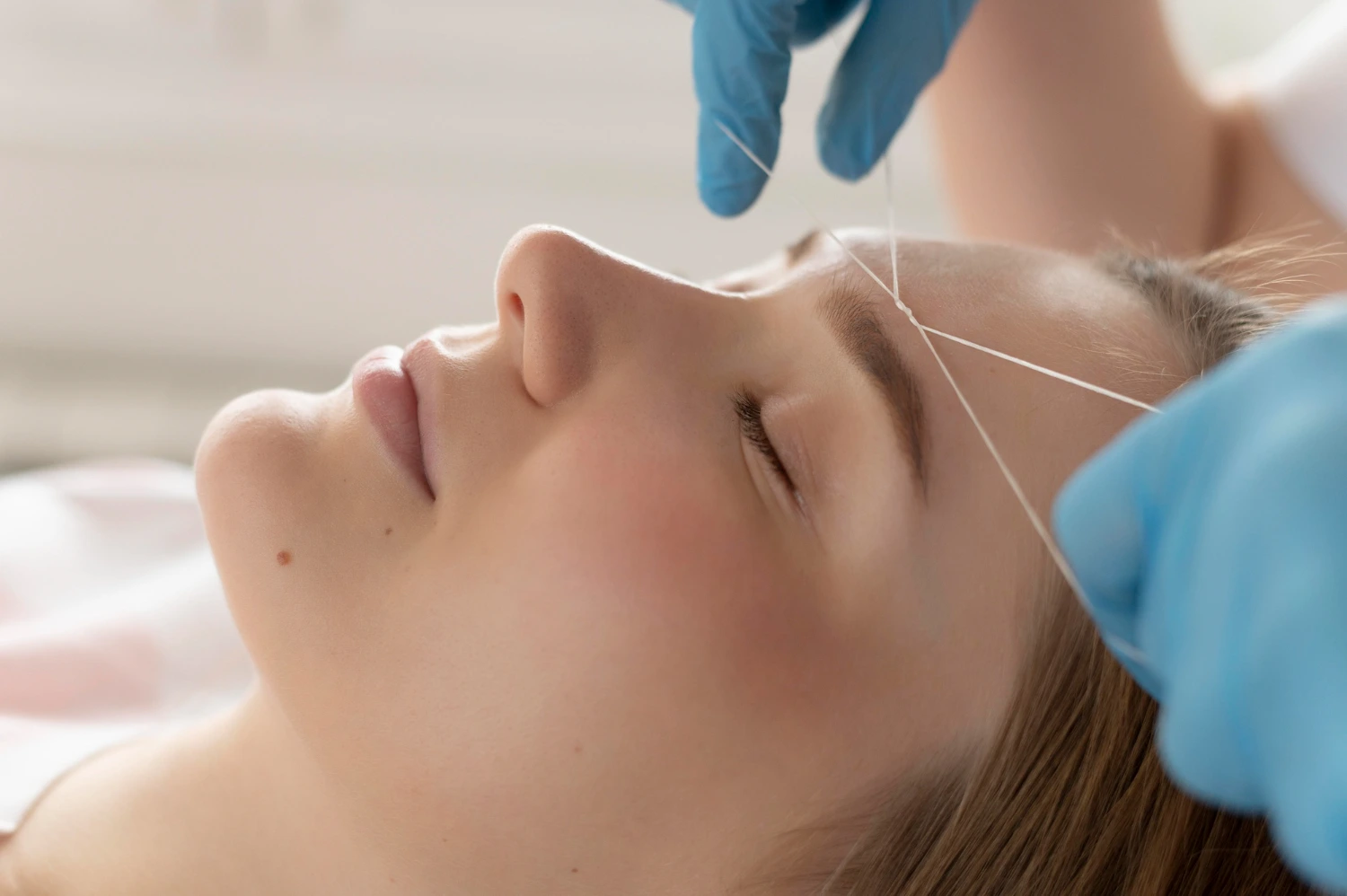
A quick look at threading’s history helps explain why it remains a gentle, effective option.
Threading: an ancient, precise method
Threading has long been used to remove facial and eyebrow hair. The technique loops a cotton thread around individual hairs and pulls them out in quick, controlled motions. Its simplicity and precision are why threading has spread globally.
Eyebrow threading: a popular hair-removal procedure and its seldom-discussed complications, 2009
Why choose threadingover waxingfor sensitive skin?
Threadingavoids heated substances and perfumed products, so there’s less risk of burns, allergic reactions, or chemical irritation. A skilled threader can remove hairscleanly and accurately, reducing trauma to the skinand often causing less painthan waxingfor delicate faces.
What are the benefits of chinthreadingover other hairremoval methods?
Chinthreadingoffers several advantages:
- Longer-lasting results: Threadingremoves hairfrom the root, so regrowth is slower than with shaving.
- Precision: It lets a technician target individual hairsand shape the chinarea with fine control.
- Gentle on sensitive skin: No chemicals or heat—threadingminimizes irritationfor most skintypes.
Because of these strengths, threadingis a popular go-to for managing stubborn winter chinhair.
How can threadinghelp with hormonal chinhair?
Threadingis effective at managing hormonal chinhairbecause it targets individual hairswithout damaging surrounding skin. That control makes it easier to keep the area neat while avoiding the extra irritationthat can come from harsher methods.
What makes threadinga good choice for hormonal hair?
Because threadingremoves hairsat the follicle and lets technicians pick out specific hairs, it minimizes skintrauma and reduces the chance of breakage — which helps prevent ingrowns. For people with hormonal fluctuations and sensitive skin, that careful approach preserves a smooth look with less irritation.
Are there special considerations for hormonal hairremoval in Queens?
Queens’ winter weather — cold, windy, and often dry indoors — can increase skinsensitivity. We recommend consulting with technicians who understand how local climate affects skinand hair, and using post-care products suited to dry, sensitive skin. Local expertise can make a noticeable difference in comfort and results.
What are the best threadingsalons in Queens for winter chinhairremoval?
Looking for a trusted place in Queens? Meena ThreadingSalon is focused on threadingservicesthat respect sensitive skinand deliver precise results. Our team tailors each session so clientsleave comfortable and confident.
Why choose Meena ThreadingSalon for chinthreadingin Queens?
At Meena ThreadingSalon, our technicians are experienced with sensitive skinand hormonal hairconcerns. We use refined threadingtechniques to reduce discomfort and improve outcomes, and our Queens location is convenient for local clientsseeking dependable winter care.
How to find sensitive-skinhairremoval near you
Use these tips to locate a gentle, effective provider:
- Read reviews: Look for recent client experiences that mention sensitive skinand comfort.
- Ask an expert: Talk to estheticians about their approach to sensitive or hormonal hairremoval.
- Check the method: Confirm they offer threading(no heat or chemicals) and understand post-care for dry, winter skin.
Following these steps will help you find a salon that treats stubborn chinhairsafely and comfortably. threading waxing
Winter skinand haircare tips that support effective chinhairremoval
Keeping skinhealthy through winter improves threadingresults and reduces irritation. Good aftercare is key to comfort and longer-lasting smoothness.

How to care for sensitive skinafter threadingin winter
After threading, follow these simple steps to protect sensitive winter skin:
- Avoid harsh products: Skip exfoliants, retinoids, and strong cleansers for at least 24 hours.
- Moisturize regularly: Use a gentle, fragrance-free moisturizer to counteract dryness.
- Shield from the cold: A scarf or high collar can protect your chinfrom wind and freezing air.
Which products may help reduce hormonal chinhairgrowth in winter?
Some approaches can support slower hairgrowth, though results vary and you should consult a pro before starting treatments: male waxing.
- Spearmint tea: Some small studies suggest spearmint may help balance hormones, but evidence is limited.
- Topical options: Prescription creams such as eflornithine can slow facial hairgrowth when used under medicalguidance.
- Professional advice: Talk to a dermatologist or esthetician for personalized recommendations based on your skinand hormoneprofile.
Using these tips alongside careful threadingcare can improve results and keep your skinhealthy through the season.
| Service | Benefit | Suitability |
|---|---|---|
| Chin Threading | Precise, long-lasting removal | Best for sensitive skin |
| Waxing | Quick coverage | Can irritate sensitive skin |
| Laser Hair Removal | Long-term reduction | Needs several sessions |
This quick comparison highlights why threadingis a top pick for sensitive or seasonal chin-hairconcerns — especially in winter.
Frequently Asked Questions
What should I expect during a chinthreadingsession?
At your appointment, a trained technician will use a cottonthreadto remove unwanted chinhairsone by one. Sessions are usually quick — often just a few minutes for the chin. You may feel mild discomfort, but most clientsfind threadingless irritating than waxing. Brief redness is normal and typically fades within an hour or two. Tell your technician about any skinsensitivities before the session so they can tailor the approach.
How often should I get chinthreadingdone in winter?
It depends on your hairgrowth, but most people return every 3–6 weeks. Because winter can change hairtexture and visibility, you might prefer slightly more frequent touch-ups. Track your regrowth and book when you start to see noticeable hairsreturning.
Can threadinghelp with ingrown hairs?
Yes. Threadingremoves hairat the rootinstead of breaking it off, which reduces the chance of hairscurling back into the skin. Its precisionalso helps technicians remove hairscleanly, lowering the risk of ingrowns and irritationon the chin.
Are there any side effects of chinthreading?
Threadingis safe for most people, though you may notice short-lived redness, mild swelling, or tenderness right after treatment. These effects usually subside quickly. Follow aftercare (avoid harsh products, keep the area moisturized) and talk to your technician if you have a history of sensitive reactions. For more information on threading waxing, visit our website.
What should I do if I experience irritationafter threading?
Soothe the area with a cool compress and apply a fragrance-free, gentle moisturizer. Avoid exfoliating or using active ingredients for 24 hours. If irritationpersists or worsens, contact a dermatologist for tailored care.
Is chinthreadingsuitable for all skintypes?
Generally, yes — threadingworks well for most skintypes, including sensitive skin, because it’s chemical-free and precise. If you have a specific skincondition or known sensitivity, consult with a professional before your first session so they can recommend the safest approach.
Conclusion
Winter can make chinhairmore noticeable, but you don’t have to accept extra irritationor guesswork. Threadingoffers precise, gentle results that suit sensitive skinand hormonal hairconcerns. If you’re in Queens, Meena ThreadingSalon provides experienced technicians and thoughtful aftercare to keep your skincalm and smooth all season. Ready to try threading? We’re here to help you look and feel your best this winter.